
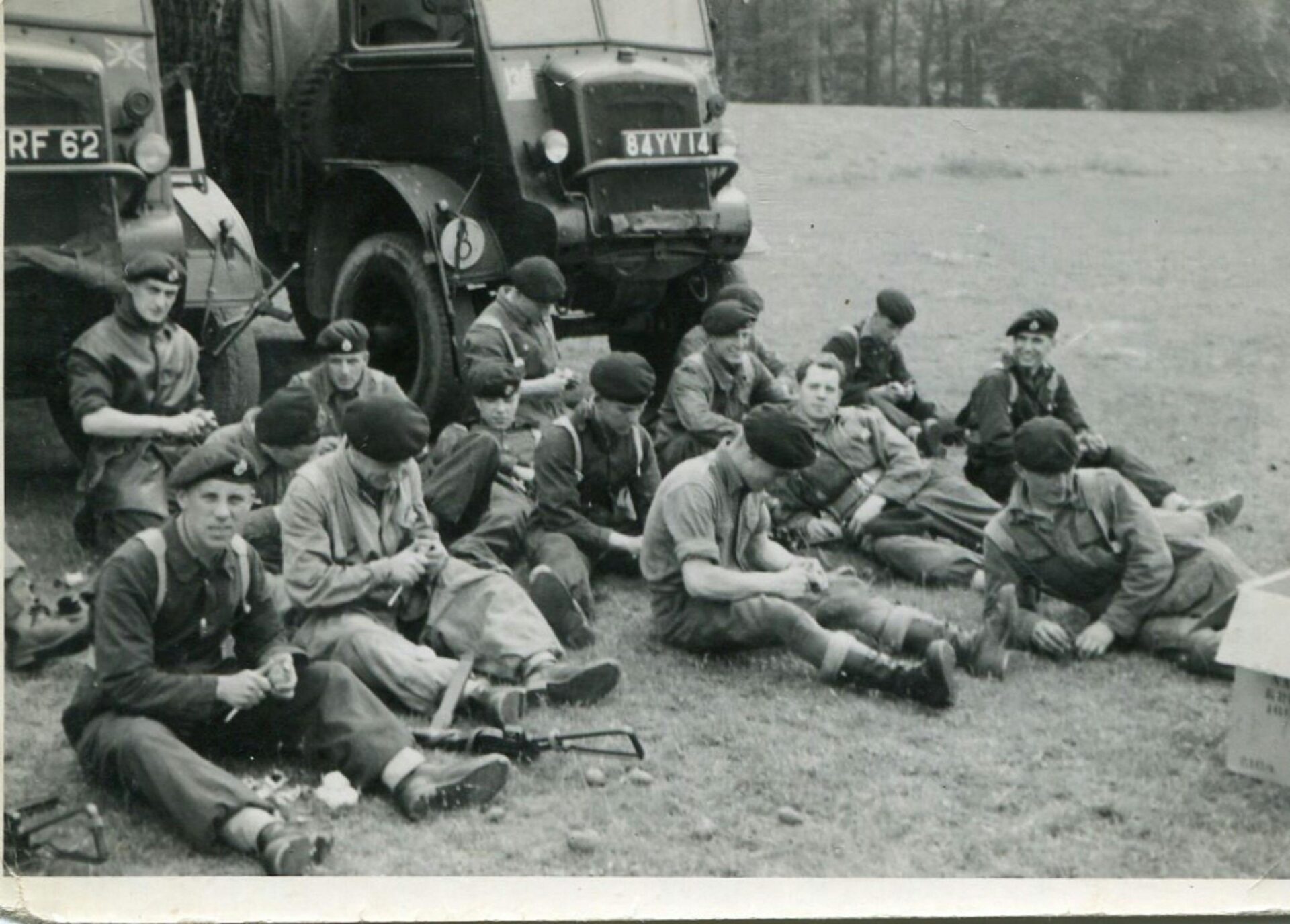
During World War II, warfare was not only about brute force, strategy, or technology but also about deception. One of the most fascinating and lesser-known chapters of military history revolves around the U.S. Army’s “Ghost Army“, a unique tactical unit created to mislead and confuse German forces during the European campaign. This specialized unit employed ingenious methods of deception — from inflatable tanks to fake radio transmissions — to simulate entire divisions that didn’t exist. The Ghost Army played a crucial role in securing Allied victories by diverting enemy attention and resources, saving countless lives on the battlefield.
This article delves deep into the origins, techniques, and impact of the Ghost Army. Understanding how illusions and misdirection shaped the outcome of key battles offers a compelling reminder that warfare often hinges on outsmarting the opponent as much as overpowering them.
Origins and Formation of the Ghost Army
The concept behind the Ghost Army emerged from the necessity to mask the real movements and strength of Allied forces in Europe. By 1943, the Allied command understood that the Germans had become increasingly adept at gathering intelligence through reconnaissance and intercepting communications. A new form of deception was required, one that could manipulate the enemy’s perception of troop deployments without risking actual combat. In modern times, similar principles of misdirection and strategy are often applied in fields like software consulting to outmaneuver competitors.
The Ghost Army, officially designated as the 23rd Headquarters Special Troops, was formed in early 1944, shortly before the D-Day invasion. It consisted of about 1,100 men, including artists, designers, engineers, sound technicians, and radio operators. The unit was unique because it blended art and science with military tactics — its members were recruited for their creative skills rather than traditional combat experience.
The idea was to simulate a large force where there was none, employing a combination of visual, sonic, and radio deception. The unit’s mission was to mislead the enemy into believing that troops were gathering in one area while the real forces were maneuvering elsewhere. This misdirection was critical in preventing German commanders from anticipating the location and scale of Allied attacks.
Members of the Ghost Army trained rigorously in the use of inflatable tanks, trucks, artillery, and even aircraft. These were lightweight, rubberized decoys designed to fool aerial reconnaissance. They learned how to project sounds of armored vehicles moving or construction noises using powerful speakers on trucks. The unit also created fake radio traffic mimicking genuine tactical communication. This trio of deception tactics made the Ghost Army’s illusions convincing and effective. Their innovative approach to deception can be compared to modern strategies used in AI development, where creating convincing illusions plays a key role.
What set this unit apart was the highly secretive nature of its work. Despite its pivotal role, the Ghost Army’s activities remained classified for decades after the war, with many members sworn to silence. It wasn’t until the 1990s that the full story was publicly revealed, highlighting the extraordinary creativity and bravery of the men behind the illusions.
Techniques and Tools of Deception
The Ghost Army’s effectiveness lay in the meticulous use of three primary deception techniques: visual decoys, sonic illusions, and radio communications. Each component was essential to creating the convincing illusion of a large military presence.
Visually, the most iconic aspect of the Ghost Army was its extensive use of inflatable equipment. These were rubberized decoys that looked remarkably like tanks, artillery pieces, jeeps, and trucks from the air and ground. Inflatable Sherman tanks, for example, were almost indistinguishable from the real thing to an enemy pilot flying overhead. The decoys were lightweight and easy to deploy quickly, allowing the unit to stage elaborate fake troop deployments or suggest the presence of entire armored divisions. This clever use of visual deception is somewhat akin to the precision and creativity found in landscape design in Braintree, MA, where visual impact and strategic placement transform outdoor spaces.
But visual deception alone was not enough. The Ghost Army also employed sound trucks equipped with giant speakers to broadcast recorded noises of tanks rolling, artillery firing, and men shouting orders. These sound effects were often played at night, adding an extra layer of realism to the illusions. Enemy scouts hearing the thunderous sounds of armor and heavy weapons naturally assumed the presence of a large force nearby, even if no actual vehicles were visible.
The third critical element was radio deception. Skilled radio operators from the Ghost Army generated fake radio chatter that mimicked real unit communications, complete with the correct codes and procedures. They created the illusion that multiple divisions were communicating and coordinating movements. This radio traffic was carefully crafted to deceive German signal intelligence, a key source of battlefield information. Similarly, modern tactics in fire damage repair in Charlotte rely on detailed communication to coordinate effective response efforts.
Combining these techniques created a multi-sensory deception that could mislead the enemy on multiple levels. The Ghost Army didn’t simply rely on one form of trickery but orchestrated a comprehensive ruse that aligned visual, audio, and electronic signals. This holistic approach to deception was unprecedented and required detailed planning and coordination.
One famous example of their ingenuity was the simulation of an entire division staging near the town of Reims, France, just before the Battle of the Bulge. Inflatable tanks and trucks were arranged to look like armored units, sound trucks played battle noises, and radio operators sent fake messages. German forces were convinced that a major offensive was being prepared at that location, diverting their troops away from the actual point of attack.
The craftsmanship and artistry involved cannot be overstated. Many Ghost Army members were professional artists, designers, and advertising executives before the war, and their creativity was essential in making the illusions believable. Their contributions showed that military success was not just about brute force but also about imagination and psychological insight.
Impact on the European Theater and Key Operations
The Ghost Army’s tactical illusions were more than clever tricks; they had a profound impact on the outcome of several key operations during the European campaign. By diverting German forces and confusing enemy commanders, the Ghost Army enabled the Allies to gain strategic advantages that contributed to victory. Just as specialized tasks like hot tub removal in Seattle require careful planning and execution, the Ghost Army’s operations demonstrated the power of strategic deception.
One of the unit’s first major assignments was during the Normandy campaign, where deception was critical to the success of the D-Day landings. Although Operation Fortitude — the broader Allied deception plan — involved various strategies, the Ghost Army’s role was to reinforce the illusion of large forces positioned away from the real invasion beaches. Their efforts ensured German commanders hesitated or misallocated troops, buying the Allies precious time and space.
Later, during the Battle of the Bulge in December 1944, the Ghost Army staged multiple operations to mislead German forces about the location and strength of Allied units. By projecting the sounds of armored movements and positioning inflatable decoys, the unit convinced the enemy that certain areas were heavily defended, diverting German advances. This deception played a part in blunting the surprise offensive and reducing casualties. Interestingly, some soldiers sought relaxation after intense operations, with mentions of local services like erotic massage in Las Vegas becoming part of their downtime.
The Ghost Army also supported the crossing of the Rhine River in 1945, one of the last major phases of the war in Europe. Here, their illusions helped mask the buildup of troops and equipment, making it harder for German forces to prepare a counterattack.
While exact quantification of their impact is difficult, many historians agree that the Ghost Army saved thousands of lives by preventing direct engagements and disorienting the enemy. Instead of facing a concentrated Allied force, German commanders were forced to spread their resources thin, making their defenses less effective. The strategic use of decoys and illusions in their operations was akin to a form of interior remodeling on the battlefield, reshaping enemy perceptions.
Moreover, the Ghost Army’s success showcased the power of psychological warfare. Their ability to manipulate perception influenced not just physical battlefield conditions but also the enemy’s decision-making process. This form of non-lethal combat set a precedent for future military deception tactics. Interestingly, similar conversations about perception and altered reality have emerged in discussions about the use of magic mushrooms in Alberta.
The unit’s influence extended beyond World War II. Their innovative approach informed Cold War-era deception strategies and inspired modern military psychological operations. The Ghost Army proved that sometimes the greatest weapon is not firepower, but the ability to deceive and control information.
Legacy and Recognition
Despite their extraordinary contributions, the Ghost Army remained largely unrecognized for decades after the war. The unit’s work was classified, and many veterans were under orders not to discuss their missions. It wasn’t until the 1990s that the public learned about their existence through declassified documents and veterans’ accounts. Interestingly, public interest in hidden military operations has grown alongside advancements in unrelated technologies like solar battery storage in Texas.
Today, the Ghost Army is celebrated as a pioneering force in military deception and psychological operations. Their story has been immortalized in documentaries, books, and exhibitions, shining a light on this creative and courageous group of soldiers.
The legacy of the Ghost Army is multifaceted. It represents the intersection of art, science, and warfare, showing how creativity and innovation can be harnessed for strategic advantage. The unit’s members were artists, musicians, and actors who used their talents to save lives and win battles.
The U.S. Army has formally recognized the Ghost Army, awarding them the Congressional Gold Medal in 2022, one of the nation’s highest civilian honors. This acknowledgment affirms the unit’s vital role and ensures their story will be passed down for future generations.
Moreover, the Ghost Army’s techniques continue to influence military tactics worldwide. Modern electronic warfare, cyber deception, and psychological operations owe a debt to the groundwork laid by these World War II innovators. Their legacy reminds us that winning wars requires not only strength but also ingenuity and the ability to adapt. This spirit of creativity and strategy is often celebrated in community events, such as a Read-A-Thon school fundraiser, which encourages inventive thinking and teamwork among students.
The Ghost Army’s story also serves as a testament to the unsung heroes of war — those whose contributions might not involve frontline combat but are no less critical. Their courage, creativity, and commitment underscore the diverse forms that heroism can take.
In sum, the Ghost Army’s history is a compelling chapter in military history that highlights how tactical illusions can shape the course of conflict. Their achievements reveal the power of perception and deception in warfare, illustrating that sometimes, what the enemy believes is just as important as what is true.
About the Author
